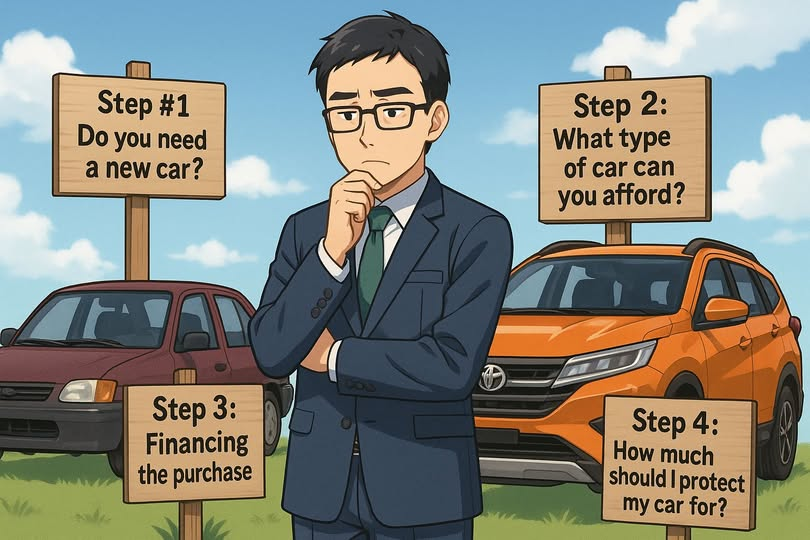
Five years ago, I wrote this article after purchasing my Perodua Aruz ie my first new car after driving my trusty Perodua Kelisa for 16 years.
Now, half a decade later, I’ve had time to see how that decision aged. The 4-step process I followed back then remains just as relevant today, and I thought I’d revisit it, with a few reflections and lessons from experience.
Step #1: Do you need a new car?
A new, expensive car is often seen as a symbol of success. But the first question to ask yourself is, do you actually need one?
When I first made my decision, it was based on two main reasons:
1. Our family had grown, and my kids were getting bigger.
2. The cost of maintaining the old car was becoming comparable to a new car’s monthly installment.
Now, both my kids are teenagers. The bigger car has definitely made a difference, especially for long-distance trips (which we don’t do that often in Malaysia, but when we do, everyone appreciates the comfort).
The key takeaway still stands, don’t buy a car for status. Buy it for function, safety, and your actual needs.
Step #2: What type of car can you afford?
The same principles apply today:
Your monthly car repayment should not exceed 15% of your monthly income. And ideally, your car loan should not go beyond 5 years.
Before deciding, always calculate your fixed household commitments ie housing, food, savings, insurance or takaful, children, etc. Then, take what’s left and split it in half:
– Half for car installments,
– Half for maintenance, petrol, and tolls.
In my case, owning a Perodua continues to prove cost-effective in maintenance. However, compared to my Kelisa, overall costs are naturally higher. I had a funny moment last year when I replaced the tyres — one tyre for the Aruz cost almost the same as four tyres for my old Kelisa!
It was a reminder that “bigger car” also means “bigger bills.”
Step #3: Financing the purchase
I had planned to settle my loan early in the fourth year by setting aside the extra each month. But in the end, I decided to just continue paying as usual since my monthly installment was very manageable — around RM400 per month, thanks to a higher downpayment upfront.
The principle remains:
If you can afford to pay off early, great. But if your cash flow is comfortable and your interest cost is low, it’s okay to just keep to your schedule. The key is that you stay in control of the decision — not the bank or your impulses.
Step #4: How much should you protect your car for?
My approach to protection hasn’t changed.
I still take coverage based on market value, which now stands at about RM53,000, with a loan balance of less than RM10,000. I didn’t take the hire purchase protection add-on, since my life and TPD coverage from my term policies are sufficient.
This remains my advice ie review your protection to ensure your liabilities won’t become a burden to your loved ones, but don’t over-insure unnecessarily.
Step #5: Planning for replacement
I’m not planning to replace the Aruz anytime soon as it’s still in great condition. I’ll probably start thinking about a replacement around the 10-year mark. This will allow me to save the monthly installments and drive around with a paid up car without worrying about my car loan.
However, I do plan to change my wife’s car next year, likely to an EV, since we’ll be installing solar panels at home. It’s a more energy-efficient and cost-effective pairing for the long term.
Conclusion
It’s been five years since I first shared this 4-step process, and I can confidently say it still holds true:
If you can’t answer Step 1 or Step 2 clearly, you’re probably not ready to buy that new car.
The goal isn’t to own the flashiest car in the parking lot — it’s to make sure every financial decision moves you closer to long-term comfort and stability, not away from it.